





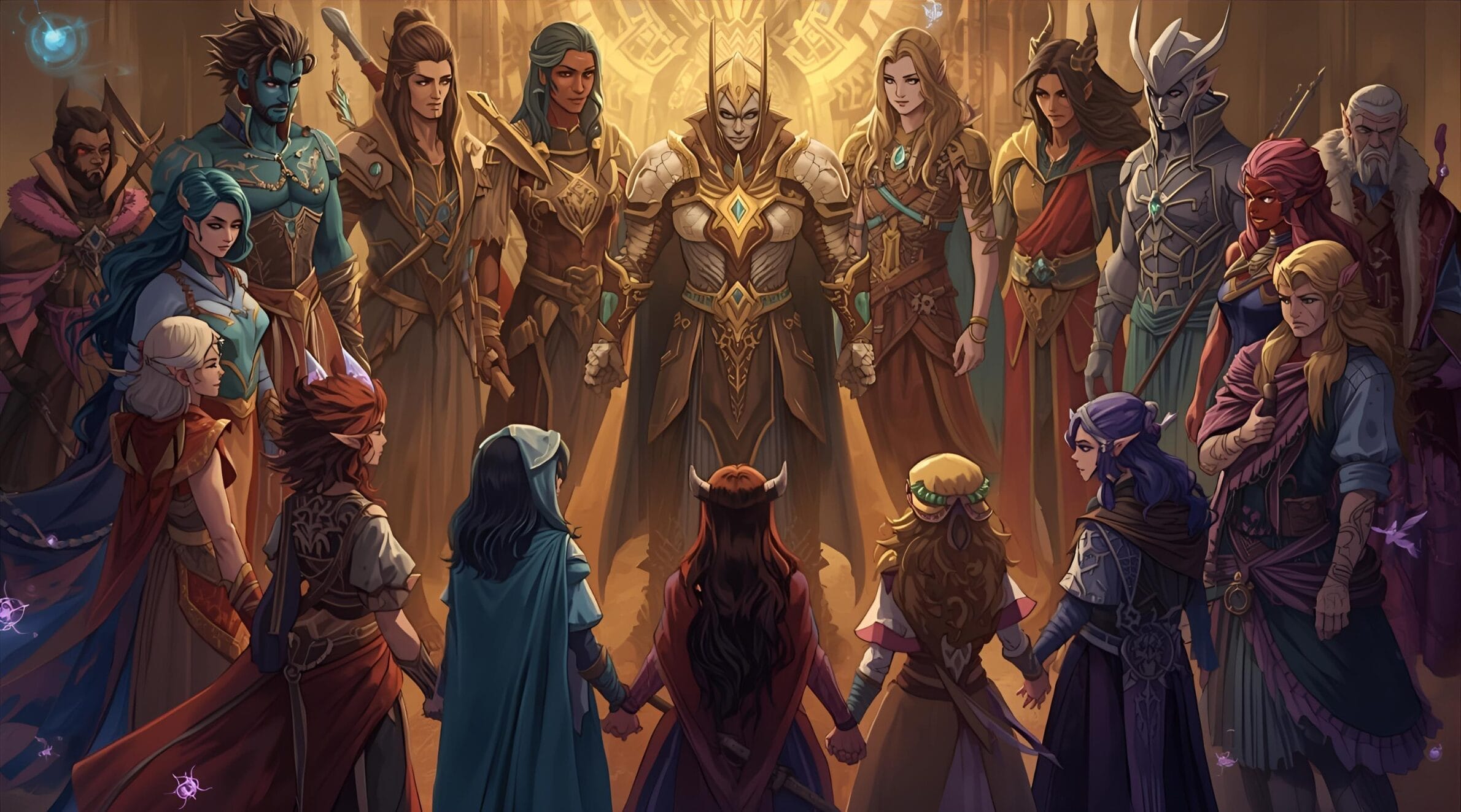
Found family is one of the most beloved tropes in fantasy romance—and one of the hardest to write well. When done right, it gives your story emotional depth, creates high stakes beyond the romance, and makes readers fall in love with your entire cast, not just your couple.
When done poorly, it feels forced, overshadows the romance, or turns into a bunch of characters who happen to be in the same room together.
After writing found family dynamics in my Sirens in the Shadows series, I’ve learned that the key is treating found family with the same care you give your romance. These relationships need development, conflict, and emotional payoff.
Here’s how to write found family in romantasy that makes readers emotionally invested in everyone.
What Makes Found Family Work in Romantasy
Found family (also called chosen family) means characters who create family bonds with people who aren’t blood-related. These relationships develop through:
- Shared trauma or difficult experiences
- Choosing to protect and support each other
- Loyalty that’s earned, not given by birth
- Creating a sense of belonging for those who lack it
- Becoming each other’s home when they have none
In romantasy specifically, found family serves multiple purposes:
- Emotional stakes beyond the romance – Give readers more people to care about
- Support system for protagonists – Show they’re not alone in their struggles
- Contrast to the romance – Platonic love highlights romantic love differently
- Source of conflict – Family can complicate romance in realistic ways
- Satisfaction in ending – HEA feels fuller when the protagonist has both love and family
The challenge is making found family enhance your romance instead of competing with it.
The Golden Rule: Found Family Should Support Romance, Not Replace It
This is where many romantasy authors struggle. They create such strong found family dynamics that the romance feels secondary—or they focus so heavily on romance that found family feels like set dressing.
Here’s the balance:
Romance is your primary plot. The love story should drive your narrative forward. Readers came for the romance.
Found family provides emotional context. These relationships show who your characters are, what they value, and what they’re willing to fight for beyond romantic love.
One relationship doesn’t diminish the other. Your protagonist can love their found family deeply while also falling in love romantically. These are different types of love serving different needs.
The test: If you removed the found family, would your romance still work? If yes, good—you haven’t made the romance dependent on platonic relationships. If no, you might need to strengthen your romantic arc.
5 Steps to Writing Compelling Found Family
1. Start With Why They Need Family
Found family resonates because the characters need it. They’re missing something that family provides.
Reasons characters seek found family:
- Lost their biological family (orphans, refugees, survivors)
- Rejected by their biological family (outcasts, disowned, misunderstood)
- Never had healthy family bonds (abuse, neglect, toxic relationships)
- Separated from family by circumstances (war, distance, duty)
- Born into isolation (supernatural beings, hidden identities)
In my series, the six Siren sisters are the last of their species. They’re found family by necessity and survival—but also by choice. They could have separated to hide better, but they chose to stay together.
Start by establishing what your characters are missing. Then show how found family fills that void.
2. Give Each Family Member a Distinct Role
Every person in your found family needs:
- A unique personality that contrasts with others
- A specific role or function in the group dynamic
- Skills or strengths that contribute to the family
- Personal struggles that other family members help with
- Individual relationships with the protagonist (not just group scenes)
Common found family roles:
- The leader who takes responsibility
- The protector who keeps everyone safe
- The heart who maintains emotional connections
- The voice of reason who prevents disasters
- The comic relief who lightens dark moments
- The rebel who challenges groupthink
- The nurturer who cares for everyone’s needs
Pro tip: Don’t make roles one-dimensional. The comic relief can have serious moments. The protector can need protection sometimes. The leader can doubt themselves.
In A Fog of Shadows, each of my six sisters has distinct personality and powers, but they also have overlapping roles. Kateri is bold and impulsive, Heather is empathetic and strategic—they balance each other while having their own complete character arcs.
3. Earn the Family Bond Through Shared Experience
You can’t just declare characters are found family. Readers need to see them become family.
Ways to show found family forming:
- Surviving danger together
- Making sacrifices for each other
- Seeing each other at their worst and staying anyway
- Creating traditions and inside jokes
- Protecting each other when no one else would
- Choosing each other repeatedly over time
The progression typically goes:
- Strangers or reluctant allies
- Respect develops through competence/character
- Trust forms through vulnerable moments
- Affection grows through shared experiences
- Loyalty solidifies through tested commitment
- Family identity emerges through choice and time
Don’t rush this. Found family that forms too quickly feels unearned. Let readers watch the bonds develop over time and through challenges.
4. Create Internal Found Family Conflict
Real families have conflict. Found families are no exception—and those conflicts often hit harder because these relationships are chosen, not obligated.
Types of found family conflict:
- Disagreements about how to handle problems
- Different values or priorities causing tension
- Jealousy or feeling left out
- Fear of losing the family bond
- Protecting someone from themselves
- Romantic relationships changing group dynamics
- Betrayal or broken trust that must be repaired
Important: Conflict shouldn’t destroy the found family permanently. The point is showing that they work through problems because they’re family. The bond is strong enough to survive disagreement.
In healthy found families, conflict leads to:
- Deeper understanding
- Stronger boundaries
- Better communication
- More authentic relationships
Show characters fighting for the relationship, not just fighting.
5. Balance Group Scenes With Individual Relationships
Found family needs both:
Group scenes show the collective dynamic—how they function as a unit, their traditions, their shared humor, their combined strength.
One-on-one scenes show individual relationships—why each person matters specifically, how they connect uniquely, what they give each other that others can’t.
Don’t make every scene a group scene. Readers need to see different relationship combinations:
- Protagonist with each family member individually
- Pairs within the family who are especially close
- Smaller subgroups with different dynamics
- The whole family together for important moments
This variety makes your found family feel real and multi-dimensional instead of treating them as a single unit.
How Found Family Affects Your Romance
Found family should complicate and enrich your romance, not simplify or overshadow it.
Ways found family can enhance romance:
Creates higher stakes: Romantic choices affect the whole family, not just the couple. If the protagonist’s love interest is an enemy of their found family, that’s serious conflict.
Provides outside perspective: Found family can see what the protagonist can’t about their relationship—for better or worse.
Tests loyalty: When romance and family obligations conflict, characters must make hard choices that reveal priorities.
Offers contrast: Platonic love highlights what’s unique about romantic love. Showing both types of relationships makes each more powerful.
Supplies support (or resistance): Found family can encourage the romance or try to protect the protagonist from it, creating either help or conflict.
Raises the ending stakes: HEA isn’t just about the couple—it’s about integrating the love interest into the found family, or the protagonist choosing between romance and family.
Common Found Family Mistakes to Avoid
Mistake #1: Telling, Not Showing
Bad: “They were like family to each other.”
Better: Show them acting like family—protecting each other, knowing each other’s tells, having inside jokes, making sacrifices, choosing each other’s company.
Mistake #2: Making Everyone Too Nice
Real families aren’t perfect. Found families shouldn’t be either. Characters should:
- Annoy each other sometimes
- Disagree about important things
- Have personality clashes
- Make mistakes that hurt each other
- Need to apologize and forgive
Conflict makes relationships feel real.
Mistake #3: Forgetting Individual Character Arcs
Each found family member needs their own:
- Goals and motivations
- Struggles and growth
- Relationships outside the family
- Moments to shine in the plot
- Reasons readers care about them individually
They’re not just supporting characters for the protagonist’s arc. They have their own journeys (even if we don’t see all of them on page).
Mistake #4: Letting Found Family Overshadow Romance
Remember: You’re writing fantasy romance, not fantasy with romantic subplot. The love story should be your primary focus.
If your beta readers are more invested in platonic relationships than the romance, rebalance. Give the romance more page time, higher stakes, and deeper emotional development.
Mistake #5: Never Threatening the Family Bond
If found family is always stable and supportive with no real threats to its existence, there’s no tension. Readers need to fear that the family could break apart—and then feel relief when it survives.
Ways to threaten found family bonds:
- External forces trying to separate them
- Internal conflict causing rifts
- Individual goals pulling people apart
- Romantic relationships changing dynamics
- Betrayals or secrets coming to light
- Sacrifice required that tests loyalty
The threat makes the bond feel precious. The survival of that bond feels earned.
Bringing Found Family to Your Romantasy
Found family works in romantasy because it answers a fundamental human need: to belong, to be chosen, to have a place where you fit.
When you write found family well, you give readers multiple characters to love, emotional stakes beyond the romance, and a richer world where relationships matter. You show that love comes in many forms—and that romantic love and familial love can coexist and enhance each other.
Start by understanding what your characters are missing and why they need family. Give each family member a distinct role and personality. Earn the family bond through shared experiences and conflicts. Balance group dynamics with individual relationships. Let found family complicate your romance in meaningful ways.
Most importantly, remember that found family isn’t just plot device—it’s emotional truth. Characters choosing to be family, staying family through hardship, and protecting that family bond even when it’s hard.
That’s the kind of relationship that makes readers cry happy tears when everyone gets their happily ever after—together.