



Structure is one of those things that seems restrictive until you realize it’s actually freeing. A solid structure gives you a roadmap—a way to know if your story is on track or veering into rambling territory.
But structuring a fantasy romance is different from structuring straight romance or straight fantasy. You’re juggling two major arcs (the romance and the fantasy plot), and both need proper development and pacing.
When I started outlining my fantasy romance series, I had to figure out how to structure stories that felt satisfying both as romance and as fantasy adventure. It took a lot of trial and error to understand which beats mattered most and how to weave everything together.
Here’s what I’ve learned about structuring fantasy romance novels that work.
The Foundation: Understanding You’re Writing Two Stories
The first thing I had to accept: Fantasy romance requires structuring TWO complete arcs.
The Romance Arc:
- How the relationship develops
- Emotional beats between characters
- Trust building and breaking
- Romantic tension and resolution
- Ending in HEA or HFN
The Fantasy Plot Arc:
- External conflict or quest
- World threats or challenges
- Character growth through adventure
- Plot mysteries and revelations
- Climactic confrontation
The key I discovered: These arcs can’t just run parallel—they need to intertwine and affect each other at every major beat.
The Three-Act Structure for Fantasy Romance
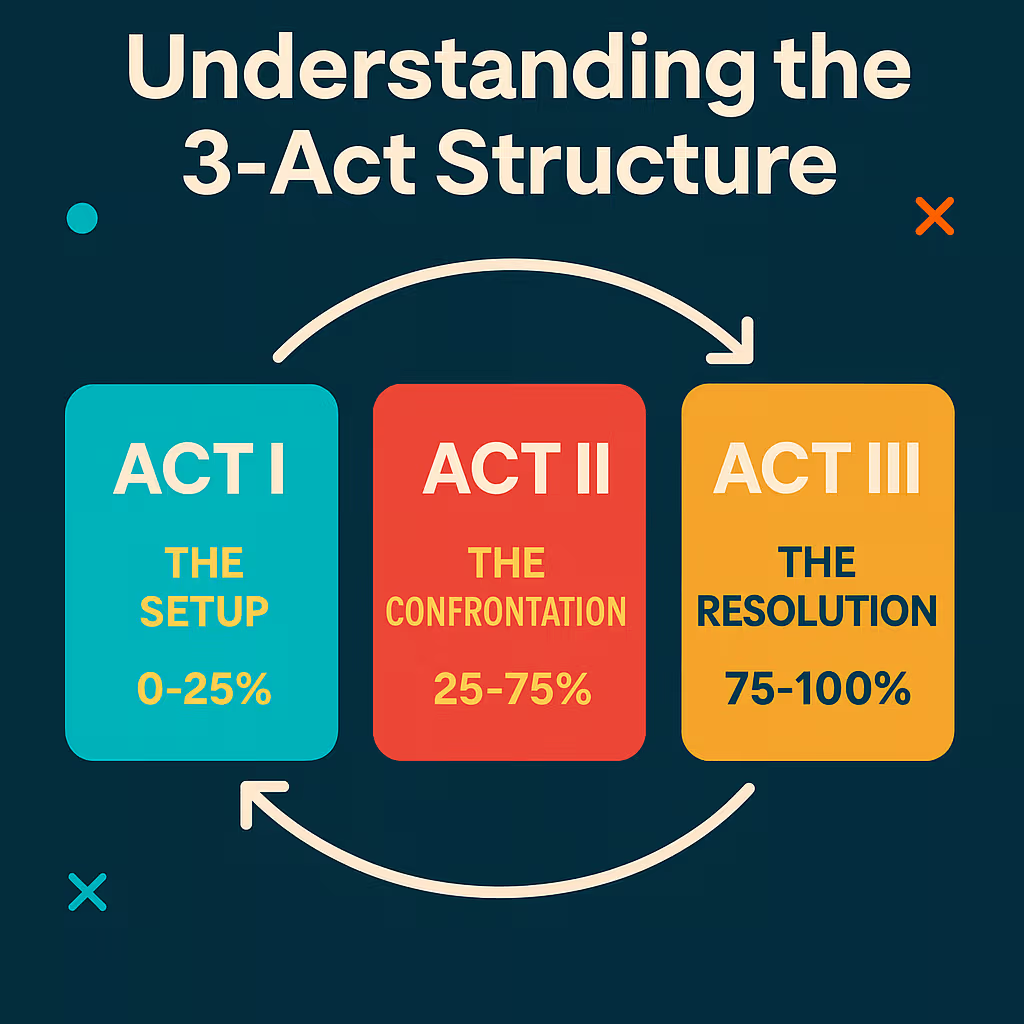
I use a modified three-act structure that accounts for both romance and fantasy elements.
ACT ONE: Setup (First 25%)
What needs to happen:
For the Romance:
- Characters meet (or re-meet if they have history)
- Establish initial dynamic (enemies, strangers, forced allies)
- Show the attraction or tension
- Make it clear why they CAN’T be together
- Create romantic chemistry readers can feel
For the Fantasy Plot:
- Establish the world and its rules
- Introduce the external conflict or quest
- Show what’s at stake
- Launch the inciting incident
- Force characters into the adventure
The connection: The fantasy plot should be what brings them together or forces proximity. The romance should give them personal stakes in the external plot.
Act One ends with: A major choice or event that commits them to both the quest and each other’s company. No turning back.
ACT TWO: Complications (Middle 50%)
This is the longest section and often the hardest to write. It’s where both arcs develop and deepen.
What needs to happen:
For the Romance:
- Forced proximity creates opportunities
- Attraction grows despite resistance
- Moments of vulnerability and connection
- Trust develops (or betrayals happen)
- Internal conflicts surface
- First kiss or major romantic turning point
- Relationship faces serious obstacles
For the Fantasy Plot:
- Complications escalate
- Obstacles get harder
- New information changes things
- Allies and enemies reveal themselves
- Stakes continue to rise
- Skills/powers develop
- Major setbacks occur
The connection: Every plot complication should affect the romance. Every romantic development should impact their ability to handle the plot.
Midpoint (50%): A major revelation or shift that changes everything. This should affect BOTH the romance and the plot. Often this is when characters realize their feelings are real, paired with a plot revelation that makes everything more complicated.
Act Two ends with: The “darkest moment” where both arcs hit their lowest point. The romance seems impossible AND the quest seems doomed. Everything falls apart.
ACT THREE: Resolution (Final 25%)
What needs to happen:
For the Romance:
- Characters face their fears/flaws
- Make the choice to fight for each other
- Overcome the thing keeping them apart
- Prove their love through action
- Reach emotional climax
- Achieve HEA or HFN
For the Fantasy Plot:
- Final confrontation with antagonist/obstacle
- Use everything they’ve learned
- Make impossible choices
- Resolve the external threat
- Show the impact of their journey
- Wrap up world/plot threads
The connection: The romantic climax and plot climax should happen together or feed into each other. Resolving one helps resolve the other.
The ending: Both arcs get satisfying resolution. The HEA feels earned because of everything they overcame together.
Key Structural Beats for Fantasy Romance
Beyond the three-act structure, specific beats help keep both arcs on track.
What I track while writing:
The Meet-Cute/First Encounter (5-10%)
- How do they first meet or interact?
- What’s the initial impression?
- What sparks (attraction, annoyance, intrigue)?
- How does the fantasy world affect this meeting?
The Call to Adventure (10-15%)
- What launches the external quest/conflict?
- Why must they work together?
- What are they each trying to achieve?
- What are the stakes if they fail?
Resistance and Attraction (15-35%)
- Why they shouldn’t be together
- Moments that pull them closer anyway
- Building trust through shared experiences
- Revealing character through action
Midpoint Shift (45-55%)
- Major revelation changes everything
- Feelings can no longer be denied
- Stakes escalate dramatically
- Point of no return for both arcs
The Betrayal/Dark Moment (70-75%)
- Trust is broken or tested
- External plot seems lost
- Romance seems impossible
- Characters face their deepest fears
- Everything falls apart
The Choice (75-80%)
- Characters decide to fight anyway
- Recommit to each other and the quest
- Face their flaws/fears
- Choose love despite costs
The Climax (85-95%)
- Romantic and plot climaxes intertwine
- Final confrontation/challenge
- Proof of love through sacrifice or action
- Resolution of both external and internal conflict
The HEA (95-100%)
- Both arcs resolve satisfyingly
- Show how they’ve changed
- Confirm their relationship
- Wrap up fantasy plot threads
- Leave readers satisfied
Pacing: Keeping Both Arcs Moving
One of my biggest challenges was pacing both arcs so neither dragged or rushed.
What I learned:
Alternate Focus, But Include Both
- Romance-heavy chapter: Still advance plot
- Plot-heavy chapter: Still include romantic moment
- Never go more than 2-3 chapters without significant development in either arc
Use Scenes That Serve Double Duty
Best scenes advance both arcs simultaneously:
- Fighting together (plot) reveals compatibility (romance)
- Intimate conversation (romance) uncovers plot information
- Shared danger (plot) creates vulnerability (romance)
- Planning strategy (plot) shows how they work together (romance)
Match the Pacing
Both arcs should build at similar rates:
- If romance is slow-burn, don’t rush the plot
- If plot is fast-paced, keep romantic tension high
- Escalate both together through acts
- Climax both together at the end
Common Structure Problems I’ve Faced
Problem #1: Romance Progresses Too Fast
The issue: Characters are committed by midpoint with no real obstacles remaining.
What I learned: Save major romantic commitment for later. Keep meaningful obstacles throughout. Relationship development doesn’t end at “I love you”—keep finding ways to test and deepen it.
Problem #2: Plot Overshadows Romance
The issue: So much happening with quests and battles that romance becomes secondary.
What I learned: Structure romantic beats into your outline just like plot beats. Make sure every act has significant romantic development, not just plot progression.
Problem #3: Sagging Middle
The issue: Act Two drags because you’re not sure what happens between setup and climax.
What I learned: The midpoint revelation is crucial. It should fundamentally shift both the romance and plot, giving you clear direction for the second half.
Problem #4: Climaxes Don’t Connect
The issue: Romantic climax and plot climax feel separate, or one happens before the other.
What I learned: Structure them to interconnect. Make defeating the villain require their emotional connection, or make their romantic choice directly impact the plot resolution.
Outlining vs. Discovery Writing
I’ve tried both approaches with fantasy romance:
Outlining:
- Plan major beats for both arcs
- Know key romantic and plot moments
- Understand how arcs intersect
- Flexibility within the structure
Discovery Writing:
- Trust the structure will emerge
- Check against beats while drafting
- Revise heavily to strengthen structure
- May require more editing
My approach: Outline the major beats but discover the details. I need to know my climax and key turning points, but I let the path between them develop organically.
What works for you depends on your process—but knowing the structure helps either way.
Questions to Ask While Structuring
When I’m outlining or revising, I ask:
About pacing:
- Where does each act begin and end?
- Are both arcs progressing at similar rates?
- Do I go too long without developing either arc?
- Does the middle drag or the end rush?
About romantic beats:
- When do they meet?
- When does attraction become undeniable?
- When do they first kiss or commit?
- What keeps them apart?
- When/how does that obstacle resolve?
- Does the HEA feel earned?
About plot beats:
- What’s the inciting incident?
- What escalates the stakes?
- What’s the midpoint revelation?
- What’s the darkest moment?
- How do they overcome the final challenge?
- Are fantasy threads wrapped up?
About integration:
- How does plot affect romance at each beat?
- How does romance affect plot at each beat?
- Do the climaxes connect or feel separate?
- Would the romance work without this fantasy plot?
Testing Your Structure
Signs your structure is working:
- Each act feels distinct with clear turning points
- Readers stay engaged throughout (no sagging middle)
- Both arcs build together
- The climax feels earned and satisfying
- The HEA makes sense given everything that happened
- Romance and fantasy elements enhance each other
Signs your structure needs work:
- Middle drags or feels repetitive
- Romance feels rushed or disconnected
- Plot overshadows romance (or vice versa)
- Climax feels abrupt or disconnected
- Arcs resolve at different times
- Readers lose interest partway through
Bringing It All Together
Structuring a fantasy romance novel is about honoring both the romance readers came for and the fantasy adventure that makes your story unique.
What I’ve learned through structuring my own books:
- You’re writing two complete arcs that must intertwine
- Three-act structure works but needs modification for romance
- Specific beats help keep both arcs on track
- Pacing both arcs together is crucial
- The climax should resolve both romance and plot
- Outlining major beats helps even if you discovery write
- Structure gives you freedom, not restrictions
I’m still learning how to nail the pacing of Act Two, still figuring out the perfect balance of romantic and plot beats. But having a solid structure as my foundation makes the writing process so much clearer.
Because at the end of the day, structure is just a map. It shows you where you’re going and helps you know if you’re on track. But the journey—the actual writing—that’s where the magic happens.
And when you structure your fantasy romance well, readers get to experience both the thrill of adventure and the satisfaction of watching two people fall in love against impossible odds.
That’s what makes fantasy romance special. And structure is what makes both elements shine.