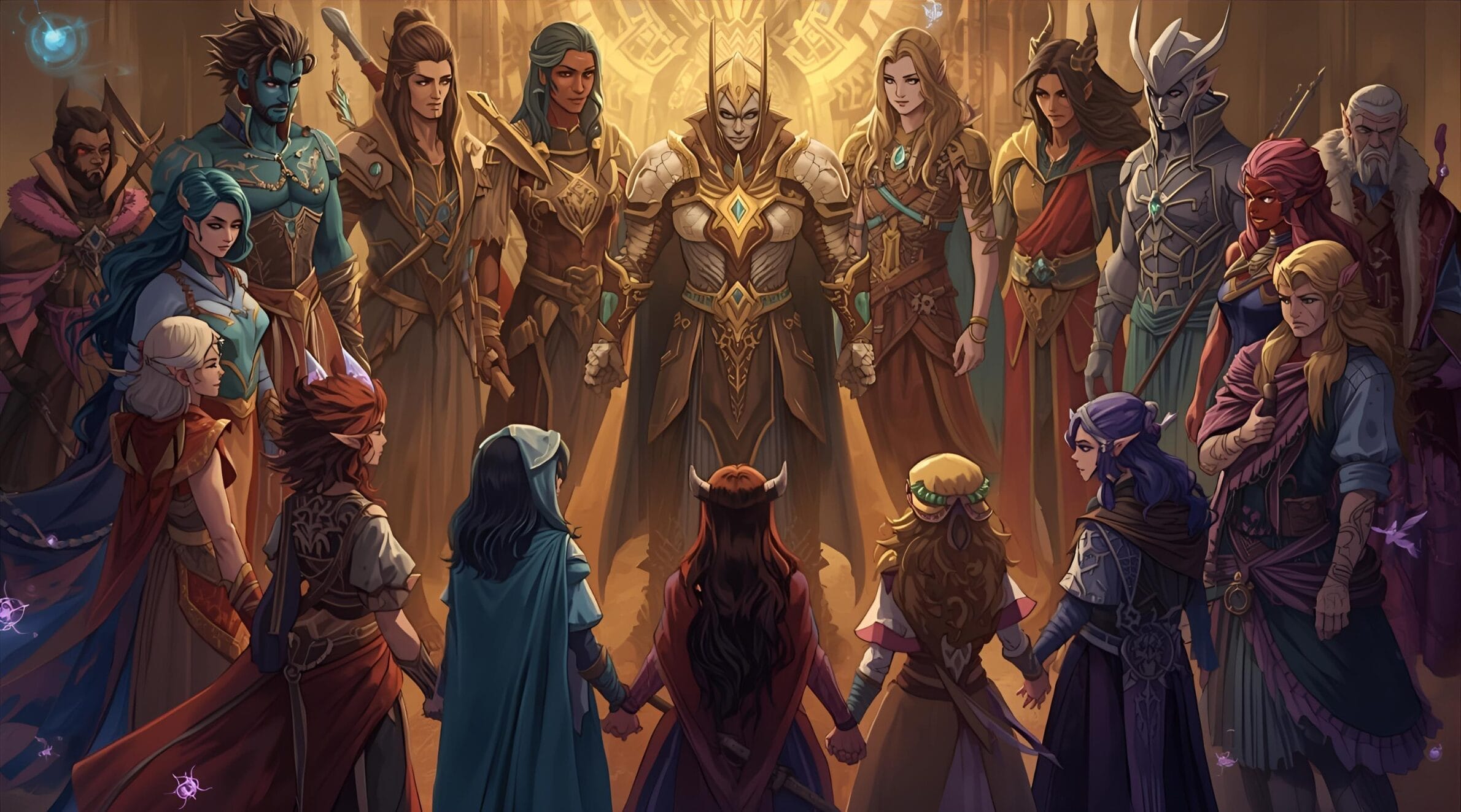




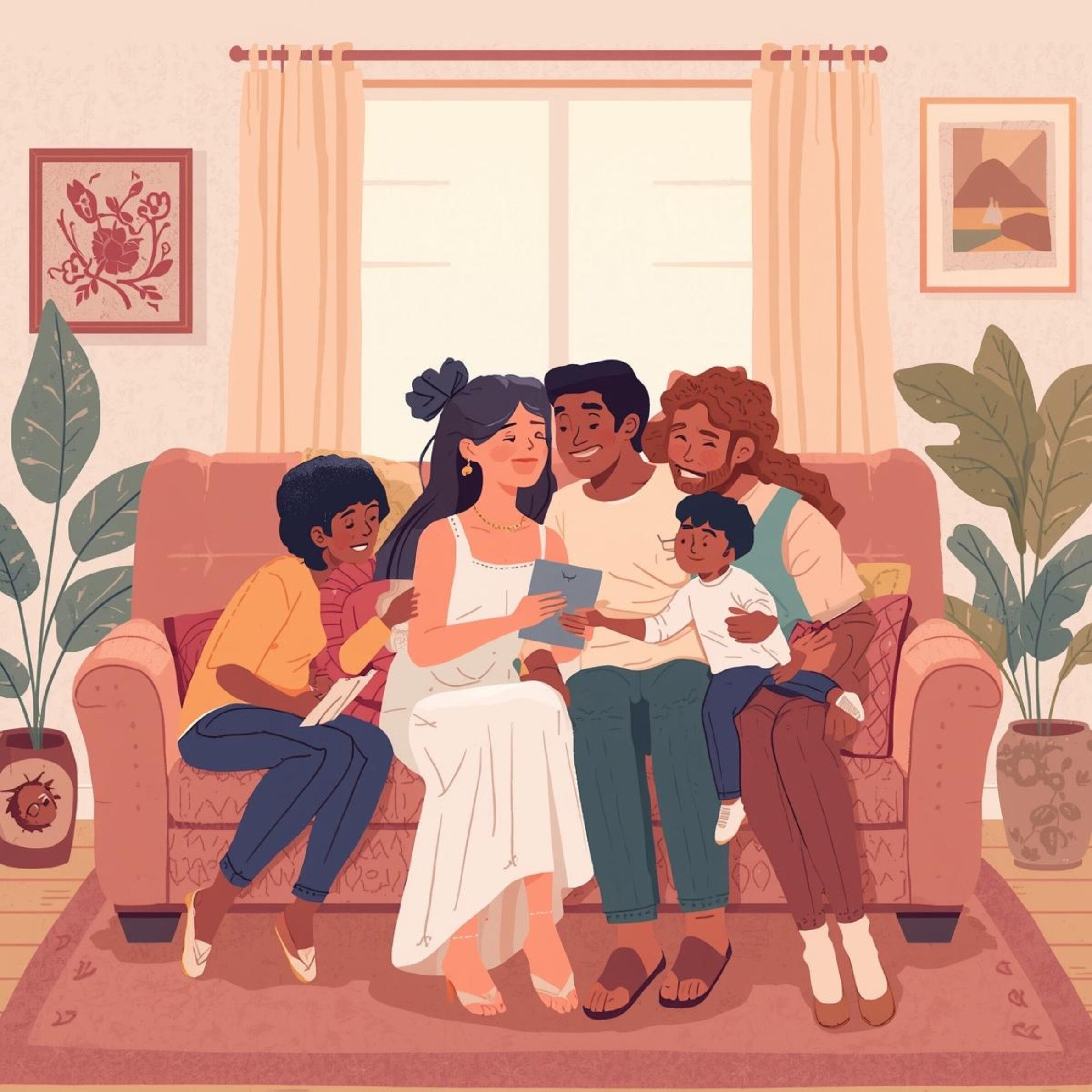

Found family is one of those tropes that can make me cry just thinking about it.
There’s something about watching characters build family from scratch – choosing each other, protecting each other, becoming each other’s home – that hits on a level biological family stories rarely reach.
And in fantasy romance specifically, found family creates some of the most emotionally satisfying narratives I’ve ever read.
Here’s what I’ve discovered about why this trope works so well and why we keep coming back to it.
The Core Appeal: Choice Over Circumstance
The fundamental difference between biological family and found family is simple but profound: choice.
You don’t choose your birth family. They’re given to you by circumstance, by biology, by accident of birth. You might love them, you might not, but you didn’t select them.
Found family is different. Every person in that circle was chosen. Every bond was forged deliberately. Every relationship exists because both people decided it should.
That choice makes everything mean more.
When a character says “you’re my family,” they’re not acknowledging a biological fact. They’re making a declaration. They’re choosing that person, claiming them, promising loyalty that wasn’t predetermined by blood.
And there’s something incredibly powerful about that.
Why It Works Especially Well in Fantasy Romance
Fantasy romance is perfectly suited for found family narratives because the genre often features characters who are:
Displaced from their original families:
- Orphans who survived catastrophes
- Last of their kind
- Exiled from their homes
- Running from their pasts
- Separated by war or magic
In situations that force bonding:
- Quests that throw strangers together
- Shared enemies that create alliances
- Survival situations that reveal true character
- Magic that connects people unexpectedly
Building something new:
- New kingdoms or communities
- Safe havens for the persecuted
- Families from the ruins of old ones
- Homes created from nothing
The fantasy setting allows for dramatic circumstances that make found family not just emotionally satisfying, but narratively necessary.
The Emotional Layers That Make It Rich
Found family stories work because they operate on multiple emotional levels simultaneously.
Belonging After Loneliness
Many found family stories start with characters who are alone. Isolated. Disconnected from any real sense of home or belonging.
Watching them find people who see them, accept them, choose them – that journey from loneliness to belonging is deeply satisfying.
Trust Earned, Not Assumed
In biological families, there’s often an assumption of trust and loyalty (even when it’s not deserved). In found families, that trust has to be earned.
Every moment of vulnerability matters. Every time a character chooses to trust becomes significant. The bonds are forged through shared experiences, through proving themselves to each other.
That makes the payoff bigger when they finally become family.
Chosen Loyalty Feels More Powerful
When a character risks everything for their found family, it means something different than when they do it for biological family.
There’s no obligation of blood. No social expectation. Just pure choice – “I choose you, and I will protect you.”
That loyalty feels more powerful because it’s entirely voluntary.
Creating Home Where There Wasn’t One
Found family stories are often about characters who didn’t have good homes – or any homes – creating one together.
They’re not maintaining family traditions. They’re building new ones. They’re deciding what their family means, how they’ll treat each other, what their home will be.
That act of creation is beautiful to watch.
How Found Family Enhances Romance
In fantasy romance, found family and romantic love often intertwine in ways that strengthen both.
The Family Supports (or Challenges) the Romance
When your heroine’s found family accepts her love interest, it feels like validation. When they’re suspicious or protective, it creates meaningful conflict that isn’t just arbitrary.
The found family becomes a mirror showing us what the romantic relationship means, how it changes the protagonist, whether it’s good for them.
Romance Expands the Family
Often, falling in love means bringing someone new into the found family circle. The romantic partner has to be accepted by the family, integrated into the group dynamic.
That creates natural tension and beautiful moments when they’re finally welcomed in.
Shared Loyalty Creates Depth
When both romantic partners are deeply loyal to their found families, watching them navigate that – protecting both their love and their family – adds layers to the relationship.
They’re not choosing between romance and family. They’re figuring out how to have both.
Family Witnesses the Love Story
There’s something special about having a found family bear witness to a romance. They see the relationship develop, they notice the changes, they celebrate the milestones.
The romance doesn’t exist in isolation – it’s woven into the fabric of the family story.
Different Types of Found Family
Found family shows up in fantasy romance in various forms:
The Small Tight-Knit Group
Three to six people who become intensely bonded. Every person matters enormously. Losing one would devastate the others.
This creates high emotional stakes and deep intimacy.
The Chosen Siblings
Characters who aren’t biologically related but claim each other as siblings. Sister-bonds and brother-bonds that run as deep as blood.
Often features protective dynamics and sibling-style bickering mixed with fierce loyalty.
The Ragtag Team
Unlikely people thrown together who shouldn’t work but somehow do. The misfit band who finds belonging with each other precisely because they don’t fit anywhere else.
This creates humor and heart as they learn to work together and eventually become family.
The Found Parent/Child Relationship
Mentors who become parental figures. Older characters who adopt younger ones emotionally if not legally.
These relationships carry particular weight because they’re filling a specific void.
The Whole Community
Sometimes found family isn’t just a small group – it’s an entire community of chosen people. A found home on a larger scale.
This creates a sense of safety and belonging that’s collective rather than individual.
What Makes Found Family Feel Earned
Not all found family narratives hit equally hard. The best ones share certain qualities:
Time and Shared Experience: The bonds develop over time, through trials faced together. We see them becoming family, not just being told they are.
Individual Relationships: Each person in the found family has distinct relationships with the others. It’s not a monolith – it’s multiple unique bonds that create a web.
Conflict and Resolution: Real families have conflict. Found families that never disagree or challenge each other feel shallow. The best ones fight and work through it.
Sacrifice and Protection: Actions matter more than words. We see characters sacrifice for each other, protect each other, show up for each other.
Creating Traditions: Found families that develop their own traditions, inside jokes, rituals – those feel most real. They’re actively building something together.
Acceptance of Flaws: True family accepts you as you are, flaws and all. Found family that only works if everyone’s perfect isn’t really family.
Why We Need These Stories
I think found family resonates so deeply because it speaks to a fundamental human need: the desire to be chosen.
In real life:
- Many of us have complicated relationships with our biological families
- We’ve all felt like we didn’t quite fit in our original contexts
- We’ve experienced the profound relief of finding “our people”
- We know what it’s like to build chosen family in our own lives
Found family stories validate that experience. They say: yes, it’s possible to build family from scratch. Yes, chosen bonds can be as strong as blood. Yes, you can find your people and create home with them.
And in fantasy romance specifically, these stories show us that love – both romantic and familial – can be something we build rather than something we’re given.
The Satisfaction of Seeing It Last
One of the most satisfying aspects of found family in series romance: watching those bonds persist across books.
The found family from Book 1 is still there in Book 6, still supporting each new couple, still being home for everyone.
Those bonds endure. They’re not temporary alliances or situational friendships. They’re family, and family lasts.
That continuity across a series creates deep satisfaction. We get to see the family grow, expand, welcome new members. We see the bonds tested and proven over and over.
It’s not just a found family story – it’s a found family life.
When It Falls Flat
Found family doesn’t always work. Here’s when it misses the mark:
Told, Not Shown: Characters claim to be family but we never see the bonds develop or the loyalty demonstrated.
Shallow Bonds: Everyone gets along perfectly with no real depth or individual relationships. It feels more like acquaintances than family.
Forgotten in the Romance: The found family is important until the protagonist falls in love, then they disappear from the narrative.
No Cost: Real family requires sacrifice. If the found family never has to give anything up for each other, the bonds feel weak.
Replaceable Members: If you could swap out any member for someone else and it wouldn’t matter, they’re not family – they’re just a group.
What I Look For
When I’m reading fantasy romance with found family elements, here’s what makes me fall in love with it:
Moments of choice. I want to see characters actively choosing each other, claiming each other as family.
Fierce protectiveness. The “touch them and die” energy applied to the whole family, not just the romantic relationship.
Inside jokes and history. References to shared experiences, callbacks to previous moments, the sense that these people have a history together.
Individual bonds. Not just a group – specific friendships within the larger family, different dynamics between different members.
Integration of romance. The romantic partner becoming part of the family, being accepted (or having to earn acceptance).
Demonstrated loyalty. Actions that prove these bonds. Sacrifices made. Lines that won’t be crossed.
Enduring presence. The found family doesn’t disappear when the plot requires it or when romance takes center stage. They remain consistently important.
Why It Hits Different
At the end of the day, found family tropes hit different because they’re about hope.
Hope that we can find our people. Hope that we can build something beautiful from broken pieces. Hope that love – in all its forms – is something we can choose and create rather than something limited by the circumstances of our birth.
In fantasy romance, where characters often start alone, displaced, or disconnected, watching them build family is watching them build home.
And there’s something profoundly satisfying about seeing characters who have every reason to be isolated instead choose connection. Choose each other. Choose to build family where there was none.
That’s the power of found family. It says we’re not limited by what we’re given. We can create our own belonging, our own loyalty, our own home.
And that message, wrapped in a great story with characters we love, is why this trope keeps hitting us right in the heart.
What’s Your Favorite Found Family?
I’d love to hear about the found family dynamics in fantasy romance that made you feel all the feelings! Drop your favorites in the comments.