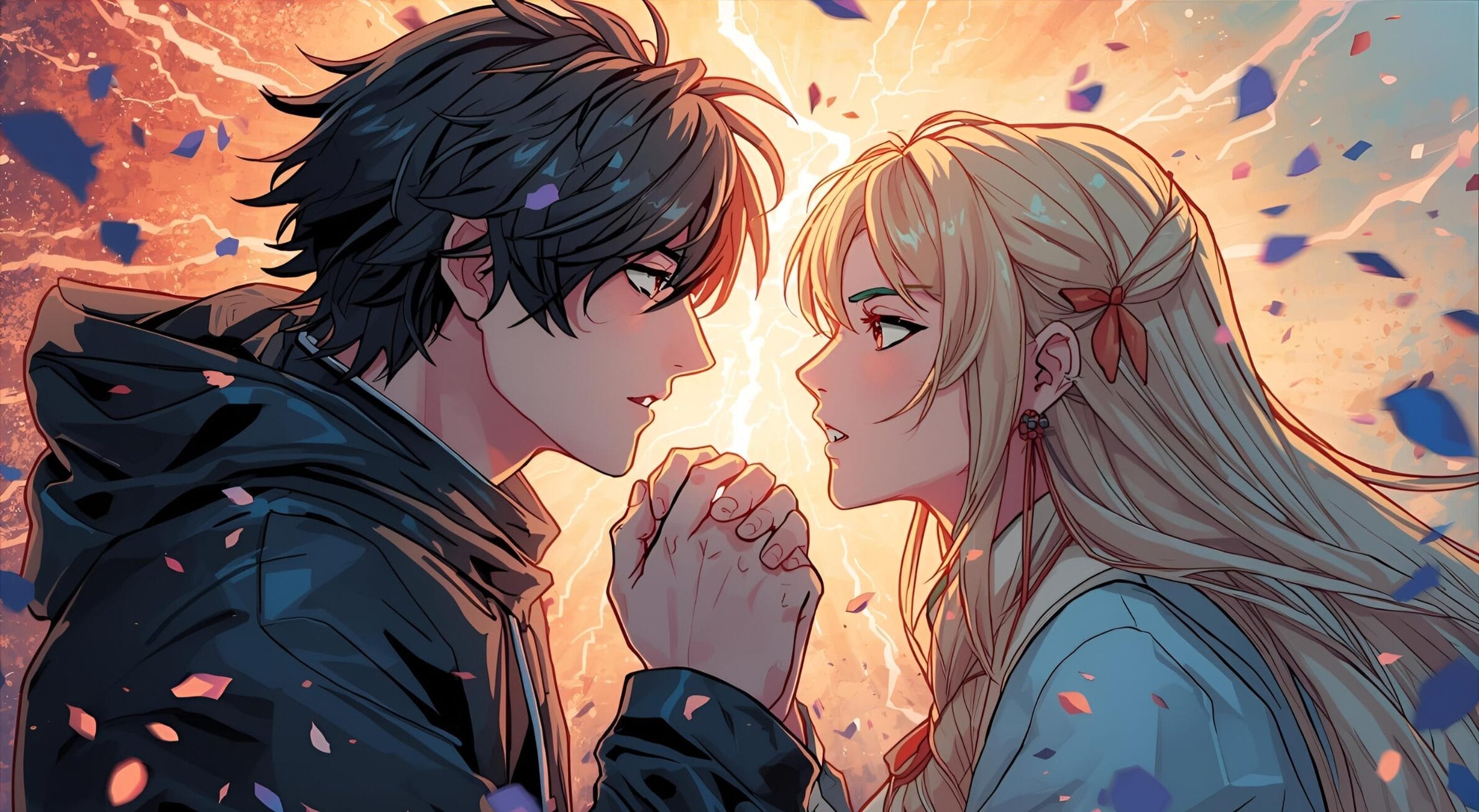






Magical bonds—mate connections, soul bonds, destiny ties—are one of the most popular elements in fantasy romance. There’s something deeply satisfying about the idea that the universe itself has chosen who belongs together.
But writing magical bonds is trickier than it seems. Make them too strong and characters lose agency. Make them too weak and they feel pointless. Use them to solve all your romantic problems and you lose tension.
When I started writing my fantasy romance series with a mate bond at its center, I had to figure out how to make the bond feel magical and meaningful while still giving my characters real choices and genuine conflict.
Here’s what I’ve learned about writing magical bonds that enhance your romance instead of replacing it.
What Is a Magical Bond?
A magical bond is a supernatural connection between characters, usually romantic partners. It can take many forms:
Common types of magical bonds:
Mate bonds/True mates:
- Magical recognition of destined partners
- Often instant or triggered by first meeting
- May include physical/emotional connection
Soul bonds:
- Deeper spiritual connection
- May transcend lifetimes
- Often includes shared emotions or thoughts
Magical marks:
- Physical manifestation of bond (tattoos, marks, colors)
- Visible proof of connection
- May appear gradually or instantly
Telepathic/empathic bonds:
- Mental or emotional connection
- Feeling each other’s emotions
- Sometimes includes communication
Life bonds:
- Connected life forces
- Harm to one affects the other
- Creates high stakes for both characters
The key question I had to answer: What does the bond actually DO in my story? It can’t just be a label—it needs to have real impact on the plot and characters.
The Biggest Challenge: Destiny vs. Choice
This is the central tension in writing any magical bond: How do you make it feel like destiny while preserving character choice?
If the bond completely controls characters, readers won’t feel the romance is earned. If the bond does nothing, why include it?
What I’ve learned works:
The Bond Creates Pull, Not Control
The bond can make characters feel drawn to each other, aware of each other, unable to ignore each other—but it shouldn’t remove their ability to choose.
Weak bond: “The bond made her love him instantly.”
Strong bond: “The bond made her hyperaware of him—his presence, his emotions, his proximity. But loving him? That was her choice, and it terrified her.”
The Bond Can Be Resisted (At a Cost)
Characters should be able to fight the bond if they choose. But resistance should have consequences:
- Physical pain or discomfort
- Emotional anguish
- Weakened abilities
- Mental strain
- Loneliness or emptiness
This creates real stakes: accepting the bond vs. fighting it becomes a meaningful choice, not an automatic acceptance.
Recognition vs. Relationship
The bond might tell characters they’re meant to be together, but it doesn’t give them a relationship. They still have to:
- Get to know each other
- Build trust
- Work through conflicts
- Choose each other emotionally, not just magically
In my writing, I found that the bond works best as the starting point, not the ending. It says “you’re meant for each other”—now the characters have to figure out what that means.
Questions to Answer About Your Magical Bond
Before you write your bond, you need to know how it works in your world.
Mechanics questions:
How is the bond formed?
- Instant recognition at first meeting?
- Gradual development over time?
- Triggered by specific event?
- Chosen or automatic?
What do characters feel?
- Physical sensations?
- Emotional awareness?
- Mental connection?
- Compulsion or just attraction?
Can the bond be broken?
- Permanent or breakable?
- What happens if it breaks?
- Can it be rejected?
- Are there consequences?
Does it work both ways?
- Do both characters feel it equally?
- Can one person feel it before the other?
- Does distance affect it?
What are the limitations?
- Does it have range limits?
- Can it be blocked or shielded?
- Does it weaken over time?
- Are there ways to resist it?
The more specific you are about how your bond works, the more consistently you can use it in your story.
Using Bonds to Create Conflict (Not Just Solve It)
One of the biggest mistakes I almost made: using the bond to eliminate romantic tension instead of creating it.
Ways magical bonds CREATE conflict:
The Bond Itself Is the Problem
Maybe your characters don’t want to be bonded:
- They’re from warring factions
- One believes in choice over destiny
- They don’t trust the bond is real
- The bond puts them in danger
- They’re already committed to someone else
The bond becomes an obstacle they must overcome, not a shortcut to romance.
The Bond Complicates Everything
Even if characters want the bond, it can create problems:
- Others want to exploit or break their bond
- The bond makes them vulnerable
- Society forbids bonded pairs
- The bond reveals secrets they’d rather hide
- Their enemies can use the bond against them
Fighting the Bond Causes Problems
If characters resist the bond:
- Physical consequences affect their abilities
- Denial creates misunderstandings
- Resistance puts others in danger
- They hurt each other by rejecting the connection
Accepting the Bond Has Costs
The bond might require:
- Sacrificing other goals or relationships
- Revealing vulnerabilities
- Making permanent commitments
- Changing their entire life plans
- Accepting truths they don’t want to face
Balancing Bond and Romance
The magical bond should enhance your romance, not replace it.
What I’ve discovered:
Chemistry Beyond the Bond
Your characters need genuine chemistry and compatibility that exists separately from the magical connection.
Test: If you removed the bond, would readers still ship this couple? If no, you need to develop the relationship more.
The Bond Doesn’t Solve Relationship Problems
Just because they’re bonded doesn’t mean:
- They automatically understand each other
- They never fight or disagree
- They don’t need to communicate
- Past trauma doesn’t affect them
- Trust is automatic
The bond might make the connection stronger, but it doesn’t fix fundamental relationship issues.
Show Both Magical and Emotional Connection
Readers need to see:
- How the bond feels (magical connection)
- Why they love each other (emotional connection)
- What makes them compatible (personality/values)
- How they work as a team (partnership)
The bond is one layer, not the only layer.
Different Approaches to Magical Bonds
There’s no one right way to write a magical bond. Here are approaches I’ve seen work:
The Instant Recognition Bond
Characters know immediately they’re bonded. Creates instant awareness and attraction, but they still must build the relationship.
Pros: Immediate stakes, clear destiny Cons: Can feel like instalove if not handled carefully
The Gradual Bond
The bond develops over time, strengthening as emotional connection deepens.
Pros: Natural progression, earned connection Cons: Less immediate magical impact
The Reluctant Bond
One or both characters resist the bond, creating tension between magic and choice.
Pros: Built-in conflict, explores free will Cons: Can frustrate readers if resistance lasts too long
The Complicated Bond
The bond comes with serious drawbacks or difficult requirements.
Pros: Creates ongoing tension, raises stakes Cons: Needs careful balance so bond doesn’t feel more curse than blessing
The Partial Bond
Only one character feels the bond initially, or the bond works differently for each person.
Pros: Interesting asymmetry, creates uncertainty Cons: Can create frustration if imbalanced too long
Common Mistakes Writing Magical Bonds
Mistake #1: The Bond Does All the Work
If characters love each other “because bond” with no actual relationship development, readers won’t be invested.
Mistake #2: No Limitations or Costs
If the bond is all positive with no drawbacks, it feels too convenient. Real magic has prices.
Mistake #3: Inconsistent Bond Rules
If the bond works differently whenever it’s convenient for the plot, readers will notice. Keep your rules consistent.
Mistake #4: Ignoring Consent Issues
Be thoughtful about how the bond affects consent and agency. Characters should still have real choices about their relationship.
Mistake #5: Bond Replaces Character Growth
The bond shouldn’t fix character flaws or eliminate the need for personal growth. Characters still need to develop.
Making Your Bond Unique
Generic magical bonds feel generic. Make yours specific to your world and characters.
Questions that helped me:
What makes your bond different?
- What unique elements does it have?
- How does it reflect your magic system?
- What unexpected aspects can you include?
How does it tie to your world?
- Is it common or rare?
- How do other characters view bonded pairs?
- What’s the history/mythology around bonds?
- Are there cultural traditions related to bonds?
How does it reflect your themes?
- What does the bond say about love in your world?
- How does it connect to your larger story themes?
- What questions does it raise?
Testing Your Magical Bond
Questions to ask while revising:
Does the bond enhance the romance or replace it?
- Take away the bond—would the romance still work?
- Are you using the bond as a shortcut?
Do characters have real agency?
- Can they choose how to respond to the bond?
- Are their choices meaningful?
- Does the bond feel like destiny without removing free will?
Does the bond create interesting conflict?
- What problems does the bond cause?
- How does it complicate the characters’ lives?
- Are there real costs to accepting or rejecting it?
Is the bond consistent?
- Does it follow its own rules?
- Does it work the same way throughout?
- Have you explained its limitations clearly?
Bringing It All Together
Writing magical bonds means walking a fine line between destiny and choice, between magical connection and earned relationship, between useful plot device and romantic shortcut.
What I’ve learned through my own writing process:
- The bond should create pull without removing agency
- Resistance should be possible but costly
- The bond works best as beginning, not ending
- It should complicate romance, not simplify it
- Real relationship development still matters
- Unique rules make your bond memorable
- Consistency is crucial
The best magical bonds make readers feel the destiny while watching characters actively choose each other anyway. They create conflict as often as connection. They raise the stakes without lowering the emotional payoff.
I’m still learning how to balance all these elements, still discovering what makes a bond feel both magical and earned. But I’ve found that when I treat the bond as one powerful element in the romance rather than the entire foundation, it enhances everything else.
Because ultimately, the magic is in watching characters choose love despite (or because of) the destiny pulling them together.