


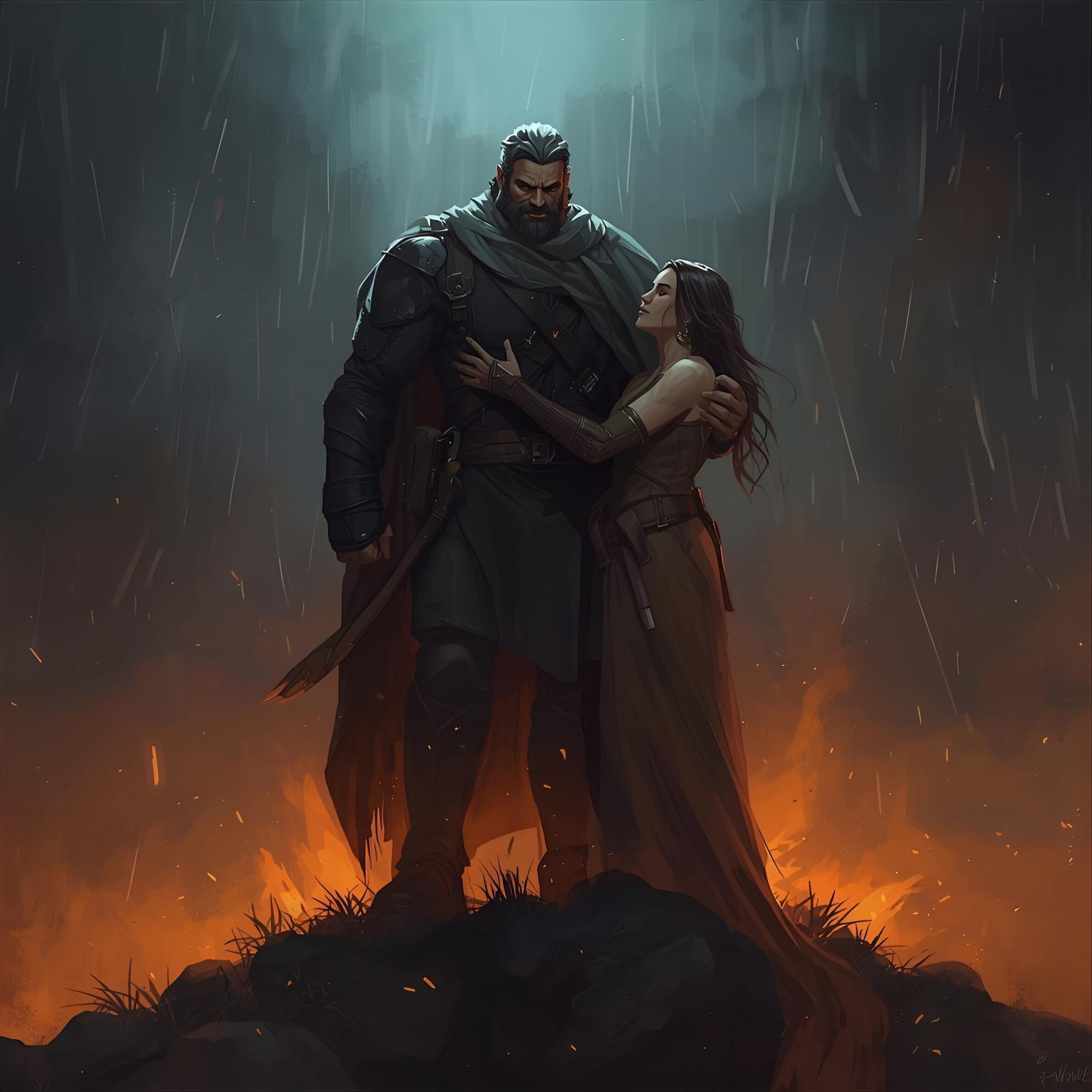

Protective hero romance is one of the most popular—and most controversial—tropes in romance.
When done right, protective heroes make readers swoon. They’re fierce, devoted, willing to face any danger to keep their loved one safe. They make readers feel cherished and valued.
When done wrong, protective heroes are controlling, possessive, and downright toxic. They treat the heroine like property, ignore her agency, and make readers furious.
The line between swoon-worthy protection and toxic control is real, and modern romance readers know the difference.
After writing protective dynamics into my fantasy romance—where Magnus is fiercely protective of Kateri while respecting that she’s a powerful Siren who doesn’t need saving—I’ve learned that the key is simple: protective heroes protect with their partner, not from life itself.
Here’s how to write protective hero romance that makes readers swoon, not scream.
Why Readers Love Protective Heroes
Before we dive into how to write them, let’s understand the appeal.
What protective heroes provide (when done right):
Feeling Valued
Someone considers your safety important. You matter enough to protect.
Emotional Safety
Beyond physical protection, they create emotional safety and security.
Fierce Devotion
The intensity of caring enough to put yourself at risk for someone else.
Primal Appeal
The archetypal protector has deep psychological and evolutionary appeal.
Fantasy Fulfillment
Most people want to feel safe, cherished, and worth protecting.
Strength Without Intimidation
A strong person using their strength for you, not against you.
The appeal isn’t about weakness—it’s about being chosen and cherished.
The Critical Distinction: Protection vs. Control
This is the most important concept in writing protective heroes.
Protection:
- Motivated by care for the other person’s wellbeing
- Respects the other person’s choices and agency
- Steps in when there’s real danger
- Can be refused or redirected
- Enhances safety without limiting freedom
- Asks “Are you okay?” and “What do you need?”
Control:
- Motivated by possessiveness or insecurity
- Overrides the other person’s choices
- Steps in even when there’s no real danger
- Cannot be refused without consequences
- Limits freedom “for their own good”
- Says “You can’t” and “I won’t let you”
Example – Protection: “That situation is dangerous. I’m coming with you.” (Partnership)
Example – Control: “You’re not going. I forbid it.” (Overriding agency)
Protective heroes protect. Controlling heroes control. Know the difference.
The Foundation: Respect for Agency
The foundation of non-toxic protective hero romance is respect for the heroine’s agency.
What respecting agency looks like:
She Makes Her Own Decisions
Even when he disagrees, he respects her right to choose.
He Supports Rather Than Overrides
Offers help, doesn’t force it. Supports her choices even when worried.
She’s Competent
The hero protects a capable person, not a helpless damsel.
Communication, Not Commands
He expresses concern and offers help. Doesn’t issue orders.
She Can Say No
To his protection, his help, his presence. And he respects that.
Example:
“I don’t like this plan,” Magnus said.
“Noted. I’m still doing it.”
His jaw tightened. “Then I’m coming with you.”
“No. I need you here coordinating the others.”
Everything in him rebelled against it. But she was right, and more importantly, it was her call to make. “Fine. But you check in every hour.”
“Every two hours.”
“Kateri—”
“Two hours, Magnus. That’s the compromise.”
He hated it. But he nodded. “Two hours. And if you miss even one check-in, I’m coming after you.”
“Deal.”
See the difference? He’s protective (wants to come, sets check-in requirement) but respects her agency (lets her say no, negotiates rather than commands).
Types of Protective Hero Dynamics
Not all protective heroes are the same. Know which type you’re writing.
The Guardian:
- Protects because it’s his duty/role
- Often bodyguard or protector by profession
- Protection is his job first, personal second
- Example: Bodyguard romance, knight/princess
The Fierce Lover:
- Protects because he loves her
- Goes from neutral to extremely protective once feelings develop
- “I’d destroy the world for you” energy
- Example: Most contemporary and fantasy romance heroes
The Reluctant Protector:
- Doesn’t want to care but can’t help protecting
- Often enemies-to-lovers or forced proximity
- Protection betrays his growing feelings
- Example: “I don’t even like you, why am I saving you again?”
The Pack Alpha:
- Protects everyone, but she’s special
- Leadership role means protective of all, but heroine is priority
- Often shifter or fantasy leader archetypes
- Example: Alpha werewolf, king, commander
The Equalizer:
- She’s powerful, he’s powerful, they protect each other
- Mutual protection, partnership dynamic
- Neither is helpless
- Example: Battle couple, both warriors
I write the Equalizer type—Magnus and Kateri both protect each other. She’s a powerful Siren. He’s a dangerous Ren. Protection goes both ways.
Creating the Protective Instinct
Why is your hero protective? Give him a real reason.
Motivations for protectiveness:
Past Trauma/Loss
He lost someone before and refuses to let it happen again. Makes protection personal.
Example: He’d failed to protect his brother. Watched him die. He wouldn’t—couldn’t—fail again. Not with her.
Cultural/Species Programming
His culture, species, or magic makes him naturally protective. Built into who he is.
Example: Ren males bonded to their mates with a fierceness that bordered on feral. Every instinct screamed at him to keep her safe, even when logic said she could handle herself.
Love and Devotion
He protects because he loves her. Simple as that.
Example: She was everything. How could he not protect her? The thought of her hurt made his chest tight, his hands shake.
Warrior/Protector Identity
Protecting is core to who he is. It’s how he shows love.
Example: He was a warrior. Protecting was what he did, who he was. And she was the most important thing he’d ever protected.
She Makes Him Feel Protective
Something about her specifically triggers his protective instincts.
Example: He’d never been particularly protective before. But with her—the way she pretended to be fine when she was hurting, the way she took on too much without asking for help—it made him want to stand between her and the world.
Give your hero a specific, personal reason to be protective beyond “because romance.”
The “Touch Her and Die” Trope
This is peak protective hero energy—and the most controversial.
What “Touch Her and Die” means: The hero becomes threatening/violent toward anyone who threatens or harms the heroine.
When it works: ✅ Real threats deserve fierce response ✅ He’s protecting from actual danger, not controlling who she talks to ✅ She appreciates it (not horrified by it) ✅ He’s selective, not aggressive to everyone ✅ Balanced with other character traits
When it fails: ❌ He threatens anyone who looks at her ❌ She’s scared of his violence ❌ He uses violence to control her social interactions ❌ It’s his only personality trait ❌ No consequences for inappropriate aggression
Example – Works:
The man’s hand closed around her wrist, grip tight enough to bruise. “I said—”
He didn’t get to finish. Magnus was there, wrenching the man’s hand away, putting himself between them. His voice was deadly quiet. “Touch her again and lose the hand.”
The man paled. Smart.
“I’m fine,” Kateri said, touching Magnus’s arm. The tension in him eased slightly at her touch, though his eyes never left the threat.
“I know you are. But he’s not going to be if he doesn’t walk away right now.”
The man fled.
Example – Doesn’t Work:
“Why were you talking to him?” Magnus demanded.
“He was asking for directions—”
“I don’t care. I don’t like other men approaching you.”
“He was asking for directions, Magnus.”
“I don’t trust him. Stay away from him.”
See the difference? The first shows protection from real threat. The second shows controlling behavior.
Balancing Protective Instincts With Her Competence
The heroine can be capable AND the hero can be protective. These aren’t mutually exclusive.
How to balance:
She Handles Most Things Herself
He’s not constantly saving her. She’s competent and capable.
He Protects in His Area of Strength
Maybe she’s a powerful mage but he’s a better fighter. Or vice versa. They complement.
Mutual Protection
She protects him too. It goes both ways.
Strategic Protection
He steps in when it makes strategic sense, not because she can’t handle it.
Emotional vs. Physical Protection
Maybe she protects herself physically but he provides emotional safety.
Example:
Kateri could destroy most threats with her Siren voice. Magnus knew that. Respected it. But when the Ren hunters came—the ones trained specifically to resist Siren magic—he put himself between them and her without hesitation.
“I can fight,” she said.
“I know. But they’re trained against Sirens. They’re not trained against me.” He smiled grimly. “Let me do what I’m good at.”
She nodded. Partnership. Using their strengths strategically.
Later, when political maneuvering threatened them, she handled it. Because navigating Siren politics was her strength, not his.
They protected each other. That was the point.
Common Protective Hero Mistakes
Mistake #1: Confusing Protection With Possession
“You’re mine” as a romantic statement vs. actual possessive behavior.
Fix: Draw clear lines. Declarations of devotion are fine. Actual possession is not.
Mistake #2: The Heroine Never Objects
She always thinks his overprotectiveness is romantic and never pushes back.
Fix: Let her set boundaries. Let her call him out when he crosses lines.
Mistake #3: No Consequences for Overreach
He acts controlling, nothing bad happens, she rewards it.
Fix: When he oversteps, there should be consequences—her anger, distance, conflict.
Mistake #4: Only He Protects
Protection is one-directional. She never protects him.
Fix: Make protection mutual. Strong couples protect each other.
Mistake #5: Protecting From Everything
He tries to shield her from all discomfort, difficulty, or challenge.
Fix: He protects from real danger, not from life. She needs to face challenges.
Mistake #6: Violence as Primary Trait
He’s constantly violent or threatening. That’s his whole personality.
Fix: Protective violence should be rare and reserved for real threats. Show other facets.
When Protection Crosses Into Control
Know where the line is and don’t cross it (unless you’re intentionally writing a toxic relationship).
Red flags that indicate control, not protection:
❌ Isolating her from friends/family
❌ Controlling her schedule or activities
❌ Tracking her constantly without consent
❌ Making decisions for her
❌ Punishing her for making choices he doesn’t like
❌ Using “protection” as excuse to limit her freedom
❌ Jealous rages over innocent interactions
❌ Threatening people she cares about
❌ “For your own good” justifications for controlling behavior
❌ She’s afraid to disagree with him
If your hero does these things, he’s not protective—he’s abusive.
The only exception is if you’re intentionally writing a toxic relationship that gets called out and changed, or a dark romance where readers know what they’re signing up for.
For mainstream romance, protective heroes respect boundaries.
The Heroine’s Response Matters
How the heroine responds to protection defines whether it’s romantic or toxic.
Healthy responses:
✅ Appreciates protection in appropriate contexts
✅ Sets boundaries when he oversteps
✅ Calls him out on controlling behavior
✅ Maintains her independence and agency
✅ Protects him in return
✅ Communicates her needs and limits
Problematic responses:
❌ Always finds controlling behavior romantic
❌ Never pushes back or sets boundaries
❌ Gives up all autonomy to please him
❌ Becomes helpless when previously capable
❌ Fears his reaction to her independence
Example – Healthy:
“You can’t just decide where I go, Magnus.”
“I’m trying to keep you safe.”
“I appreciate that. But you don’t get to make unilateral decisions about my life. If you’re concerned, we discuss it. We make decisions together.”
His jaw tightened. “What if you make a choice I think is dangerous?”
“Then you tell me your concerns, I consider them, and I make the final call about my own life. That’s how this works.”
“And if I can’t accept that?”
“Then we have a bigger problem than where I’m going tomorrow.”
She sets boundaries. He can learn to respect them or not, but she’s clear about what’s acceptable.
Protective Heroes in Different Romance Subgenres
How you write protective heroes varies by subgenre.
Contemporary Romance: Modern protective heroes focus on emotional support, practical help, standing up for her in social situations. Less about physical danger, more about emotional safety.
Fantasy/Paranormal Romance: Physical protection is often literal—battles, magical threats, dangerous quests. Protective instincts can be enhanced by magic, bonds, or species traits.
Historical Romance: Period-appropriate protection. Social consequences, reputation, physical dangers of the era.
Romantic Suspense: Real physical danger justifies protective behavior. Hero often has skills/training that make protection logical.
Dark Romance: May intentionally push boundaries or explore possessive/obsessive protection. Readers expect different standards.
Know your genre’s conventions and reader expectations.
Making Protective Moments Swoon-Worthy
When done right, protective moments make readers’ hearts flutter.
Elements of swoon-worthy protection:
Fierce but Controlled
He’s dangerous to threats but gentle with her.
Example: His voice was ice when he spoke to the intruder. “Leave. Now.” But when he turned to her, his touch was feather-light. “Are you hurt?”
Putting Himself at Risk
Literally shielding her with his body, taking wounds meant for her.
Example: He saw the blade coming. Didn’t think. Just moved, putting himself between Kateri and the attack. Pain lanced through his shoulder as the blade struck, but she was safe. Worth it.
Respecting Her Choices While Offering Support
“I’ll support whatever you decide, but I’m here if you need me.”
Example: “It’s your call,” he said. “But whatever you decide, I’m with you. Want me to come? I’m there. Want me to stay back? I’ll wait. Just tell me what you need.”
The Growl/Protective Voice
Low, dangerous tone reserved for threats. Romance readers eat this up.
Example: “She said no.” His voice dropped to a dangerous rumble. “I suggest you listen.”
Physical Positioning
Putting himself between her and danger without being asked.
Example: He moved before thinking, shifting so he was between her and the stranger. Not blocking her—she could see past him if she wanted—but positioned so anything coming had to go through him first.
The Aftermath
Checking on her, tending wounds, making sure she’s okay.
Example: The threat was gone, but his hands were still shaking as he checked her over. “Are you hurt? Did he touch you?”
“I’m fine. Magnus, I’m fine.”
“Let me see.” His fingers were gentle as he checked her wrists where the rope had been. “These need treating.”
“They’re just rope burns—”
“They need treating,” he repeated firmly, already pulling out medical supplies.
Protective Declarations That Work
What protective heroes say matters.
Swoon-worthy protective declarations:
“Anyone who hurts you answers to me.”
“I’d burn the world down before I let anything happen to you.”
“Over my dead body.” (When someone threatens her)
“You’re safe. I’ve got you.”
“No one touches you. Not while I’m breathing.”
“I’ll keep you safe. Always.”
The key: Fierce devotion without ownership language. “I’ll protect you” not “You’re mine to protect.”
Mutual Protection: The Modern Standard
The best modern protective romances feature mutual protection.
Why mutual protection works:
- Shows equality in the relationship
- Both partners are strong
- No one is reduced to damsel or brute
- More realistic and satisfying
- Appeals to modern readers
Example:
Magnus protected Kateri when Ren hunters came. Kateri protected Magnus when Sirens threatened him. Neither was weak. Both were fierce. Together, they were unstoppable.
That’s partnership.
When He Can’t Protect Her
Sometimes the most powerful moments are when the protective hero can’t protect.
Why this matters:
- Shows vulnerability
- Creates emotional depth
- Demonstrates that protection isn’t control
- Allows heroine to prove her strength
Example:
Magnus couldn’t follow her into the Siren-only trial. Couldn’t protect her there. Every instinct screamed at him to find a way, but this was hers to face.
“I hate this,” he said quietly.
“I know.” She touched his face. “But I can do this.”
“I know you can. Doesn’t mean I like watching you walk into danger.”
“That’s how I feel every time you face Ren hunters.”
Fair point. She’d felt this same helpless fear. “Come back to me,” he said.
“Always.”
The protective hero learning to trust her strength is powerful character development.